Journal
Rhinoplasty after 50: what skin and tip droop change
Rhinoplasty after 50 works with older skin and a tip that drops with time. What changes, what stays realistic, and how to preview a gentle goal.
 Rebecca Wetherby
Rhinoplasty after 50 is not a different operation. It meets a different starting point: skin that is thinner or looser, and a tip that has often dropped with time. Realistic plans are usually gentler and more specific.
This post explains what changes with age, what a surgeon weighs, and how to look at a modest goal before deciding. It covers appearance and planning only, not a promise of results.
Who is our model, and what does she show?
A note on the pictures first. Our model is 42, not 50. She shows the stage where many people begin to notice early tip droop and skin change, so she is a planning example. She cannot show how a 55 or 60 year old face would heal.
Her side profile has a rounded tip that sits slightly low and a straight, soft bridge. The skin has sun freckles and fine texture. That makes her a fair base for a small, conservative edit.
I changed one thing in the simulation: the angle of the tip, shown in side view. The bridge, nostrils and chin stay put.
What does age do to the skin on the nose?
Nasal skin changes over the decades. It can lose some elasticity and become thinner in places, or in other people thicker and oilier around the tip. Both patterns matter for planning.
Thin skin shows what lies beneath. Small irregularities in cartilage or bone can become visible, so surgeons tend to plan smoother, less aggressive reshaping. Thicker skin hides detail and can limit how much refinement shows.
Skin also needs time to settle. After surgery it shrinks back over the framework, and in older noses that process can take longer. That is a general pattern, and your own timeline is for your surgeon to explain.
| Factor | Often seen in younger noses | Often seen after 50 |
|---|---|---|
| Skin | Firmer, more elastic | Thinner or looser, varies by person |
| Tip position | Closer to its original angle | May sit lower as support loosens |
| Cartilage | Springy and supportive | Can be weaker or more rigid |
| Planning style | Wide range of options | Often more conservative and tailored |
None of this is a rule. A healthy 55 year old can heal beautifully, and a 30 year old can have thin skin. The table is a guide to the questions, not to your outcome.
What is tip droop and why does it happen?
The tip of the nose is held up by cartilage and the ligaments that tie it together. Over decades gravity, skin loosening and weakening support can let the tip sink and point slightly downward.
Many people describe it as a nose that looks longer, or a tip that tilts toward the lip when they smile. It can also make a bump on the bridge look larger by contrast.
A tip lift, or rotation, raises the angle a little. Done conservatively, it can open up the profile without making the nose look turned up. Overdoing it is the classic risk, and older skin shows that clearly.
Here is a gentle simulation on our model. Only the tip angle changes, by a clear but natural amount.
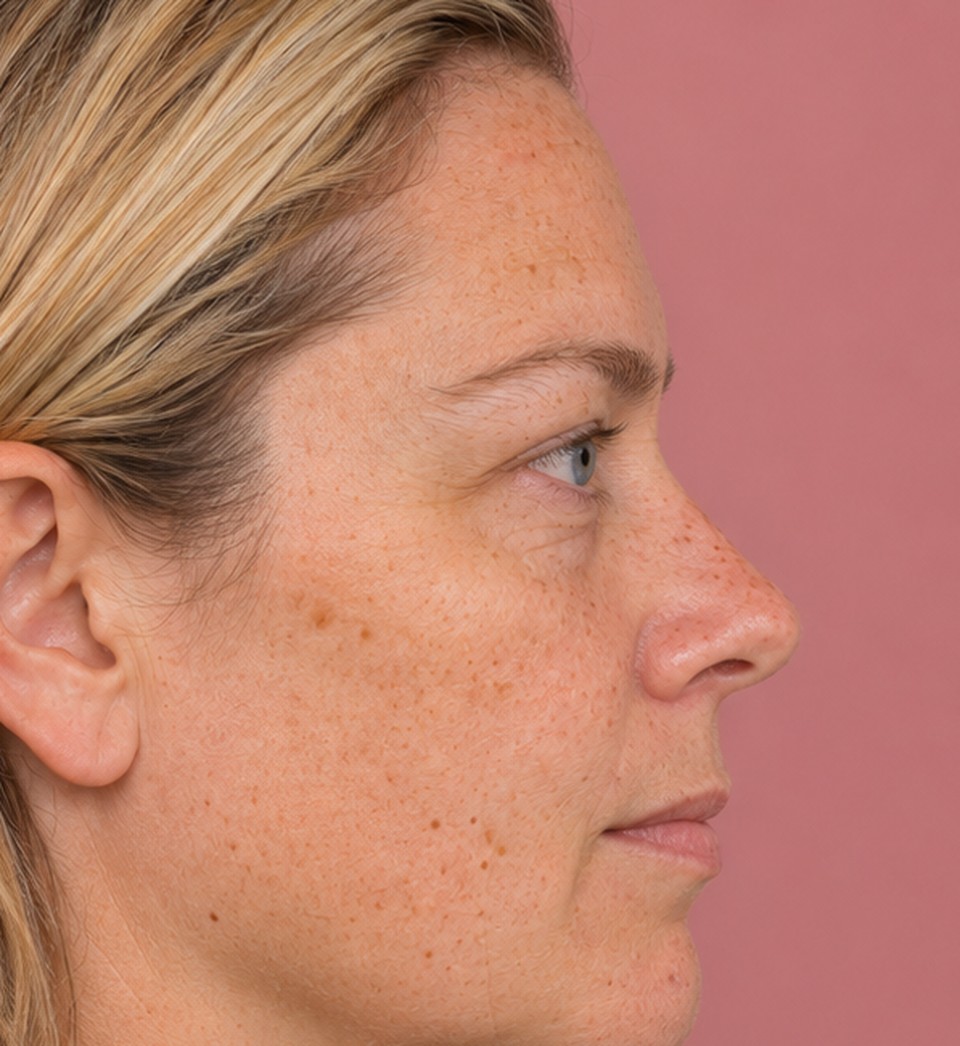
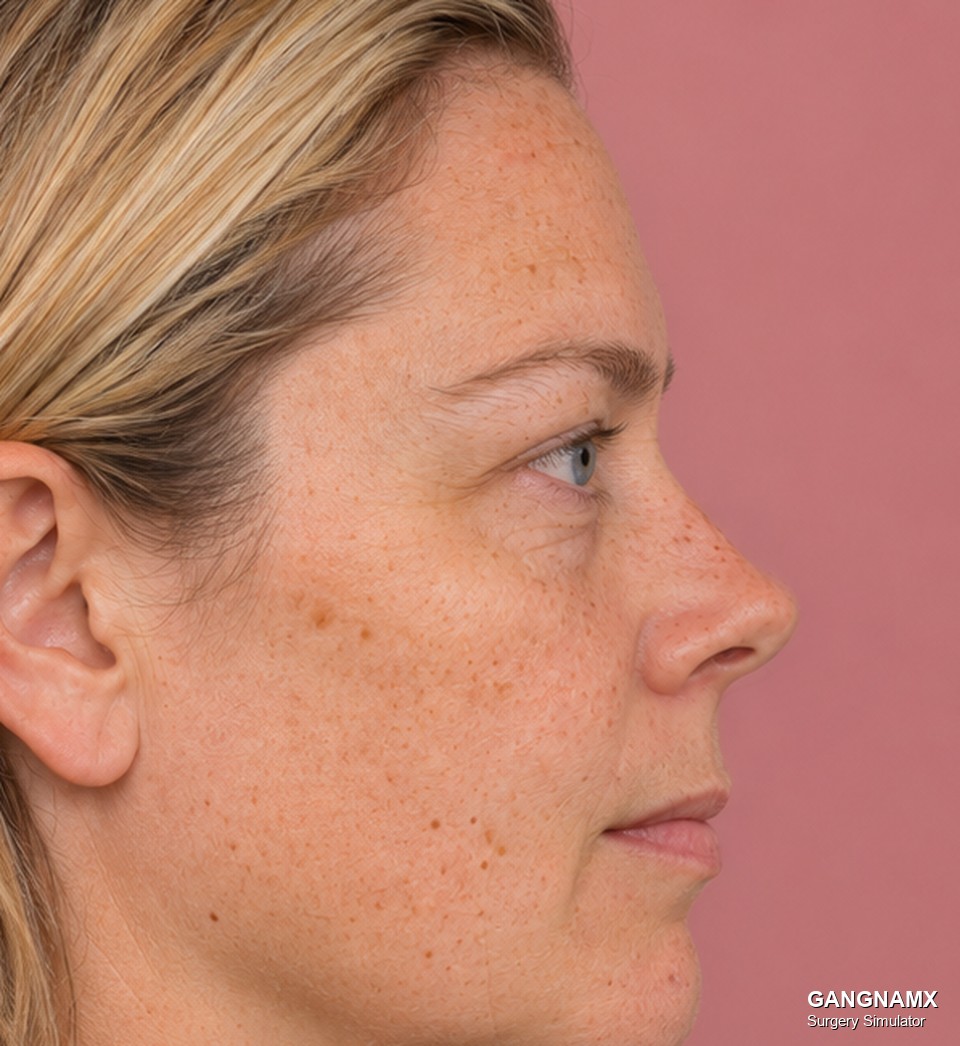
Follow the line from the bridge down to the tip. The tip rises and turns up a little, the nose looks shorter and lighter at the end, and the profile still reads as the same nose.
What are realistic goals on a mature face?
Good goals on an older face are usually about harmony, not transformation. Think of three modest aims: a tip that sits a little higher, a bridge line that looks cleaner, and a profile that matches the rest of the face.
Matching matters because the face has also changed. A very small or very upturned nose can look out of place next to mature skin and features. A nose that fits the face tends to look natural at any age.
Preserving your features is part of the plan. A nose can be refined while keeping its family resemblance to you, and a surgeon can tell you which of your features carry that resemblance.
What about breathing and health?
Mature noses are more likely to have breathing trouble, because the cartilage that holds the nostril open can weaken with age. A droopy tip can narrow the airway a little. For some people the functional side is the main reason to consult.
That is a medical question, and it comes first. A good consultation covers how you breathe, your medical history and any medicines, then looks at shape. If breathing needs help, the plan should include it.
Healing also deserves honesty. Bruising and swelling can last longer for some people, and recovery may feel slower. Ask about timing before you set a date for a family event or a trip.
Can a nose look younger without looking operated?
Often the best aim is a nose that looks like yours at its best, not a younger copy. Small shifts in tip angle and a cleaner bridge line can take years off the profile without announcing themselves.
The giveaway of an overdone result is mismatch. A tiny, sharply upturned nose next to a mature face draws attention. A modest change that respects the face tends to disappear into it, and people notice you, not the nose.
That is also why a preview helps. Seeing a gentle edit beside the original shows you how much is enough, and how quickly more starts to look like too much.
What should you bring to a consultation?
Age is a good reason for care, not a reason to rule anything out. Health, medications and breathing also matter at this stage, so a thorough review comes before looks.
Bring these questions.
- What is the condition of my nasal skin, and how does it affect what is realistic?
- Is my tip droop mainly support, or mainly skin and length?
- How conservative would you plan my change, and why?
- Is there a breathing issue that should be addressed at the same time?
- What does recovery usually look like at my age, and what would slow it?
Be wary of any plan that promises a younger nose. A surgeon can describe what is realistic for your tissue, and the careful ones will say what they would not do.
A preview helps you decide how much change you actually want. Compare a small tip lift with the original on your own photo, then take the version you like to your consultation.
Simulation images by GangnamX.