Journal
The Zendaya style jaw and cheek balance on your own face
A look study by appearance only: what a defined cheek and tapered jaw balance is made of, and how to test the idea on your own proportions first.
 Rebecca Wetherby
When people say “Zendaya style jaw and cheeks”, they usually mean a look: clear cheekbones, a tapered lower face and a calm jaw line. That is a balance of two curves, not one feature to copy.
This is a study of appearance only. We say nothing about anyone’s history. We break the look into parts, test each part on one model, and ask what it would mean on a different face.
What is the look actually made of?
A look like this reads from three visible things. The cheekbone sets a highlight at mid face. The jaw sets the edge of the lower face. The chin closes the shape in a soft taper.
What people often respond to is how those three relate. Cheeks that catch light a little higher than the jaw line create a gentle V in the lower face. It reads as defined without looking sharp.
Our model starts from an oval face with soft cheeks and a smooth, rounded jaw edge. Her features are her own, so I kept the question simple: how would a modest shift in cheek and jaw balance read on this face?
| Part | What reads on a photo | What changes it |
|---|---|---|
| Cheekbone | A highlight and shadow below it at mid face | Bone shape, soft tissue volume, lighting |
| Jaw line | A clean edge from ear to chin | Jaw angle, lower face fat, muscle bulk |
| Chin | How the shape finishes at the bottom | Projection, width, length |
Lighting matters as much as structure. The same cheek can look flat under a ceiling light and defined near a window. Keep that in mind before judging a reference photo.
What does a stronger cheek line do?
In the first simulation, only the cheek area changes. The cheekbone area gets clearly more definition, and the jaw and chin stay exactly as they were.
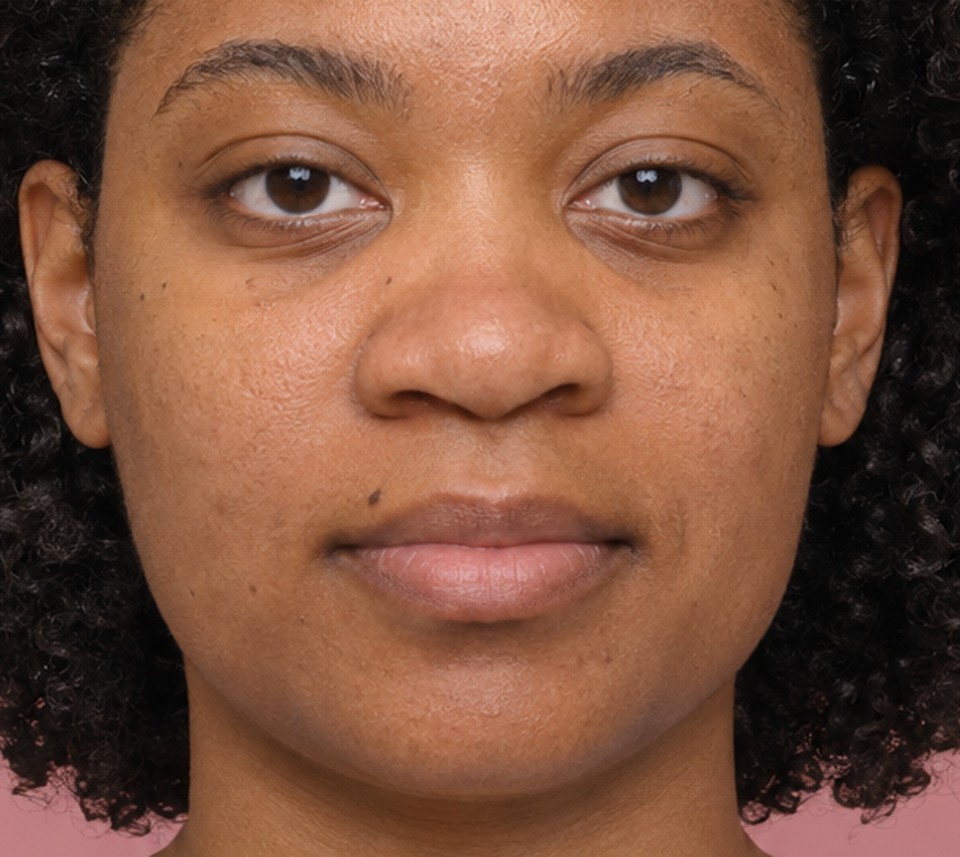
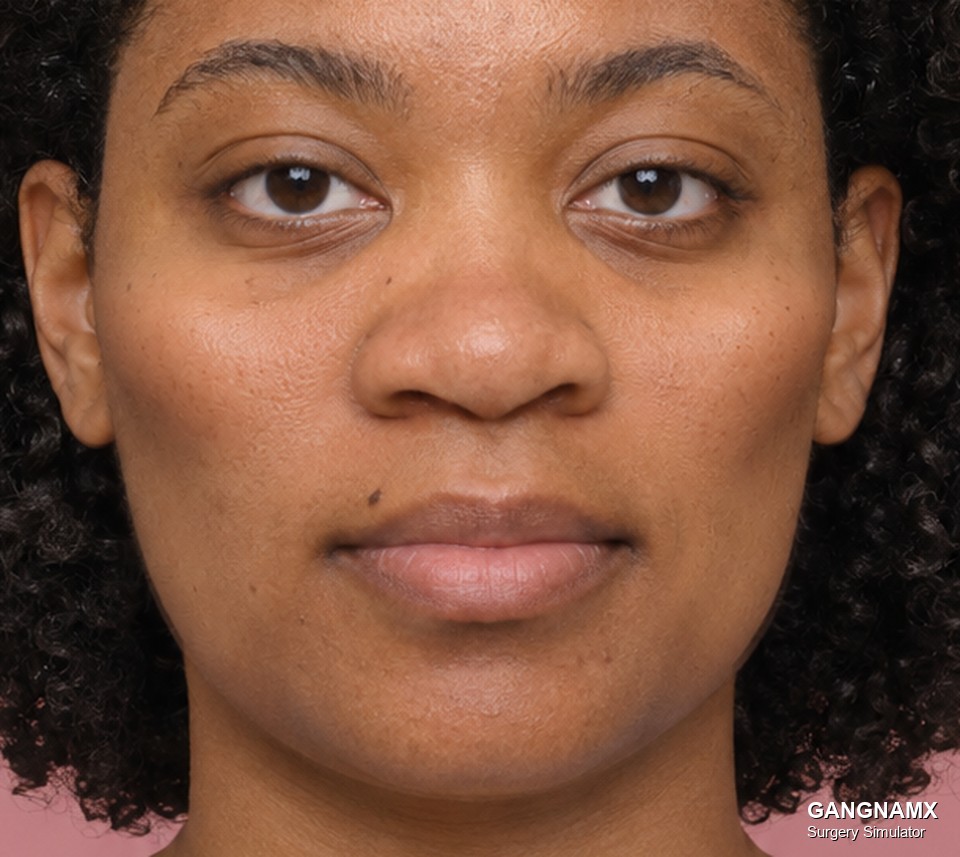
Look at the middle of the face. The change is a deeper, softer shadow under the cheekbone and a brighter highlight on top of it. You can see it without hunting, and it is still a believable shift.
What does a more tapered jaw do?
Now the opposite test. The cheeks stay as the original, and the lower face tapers visibly toward the chin.
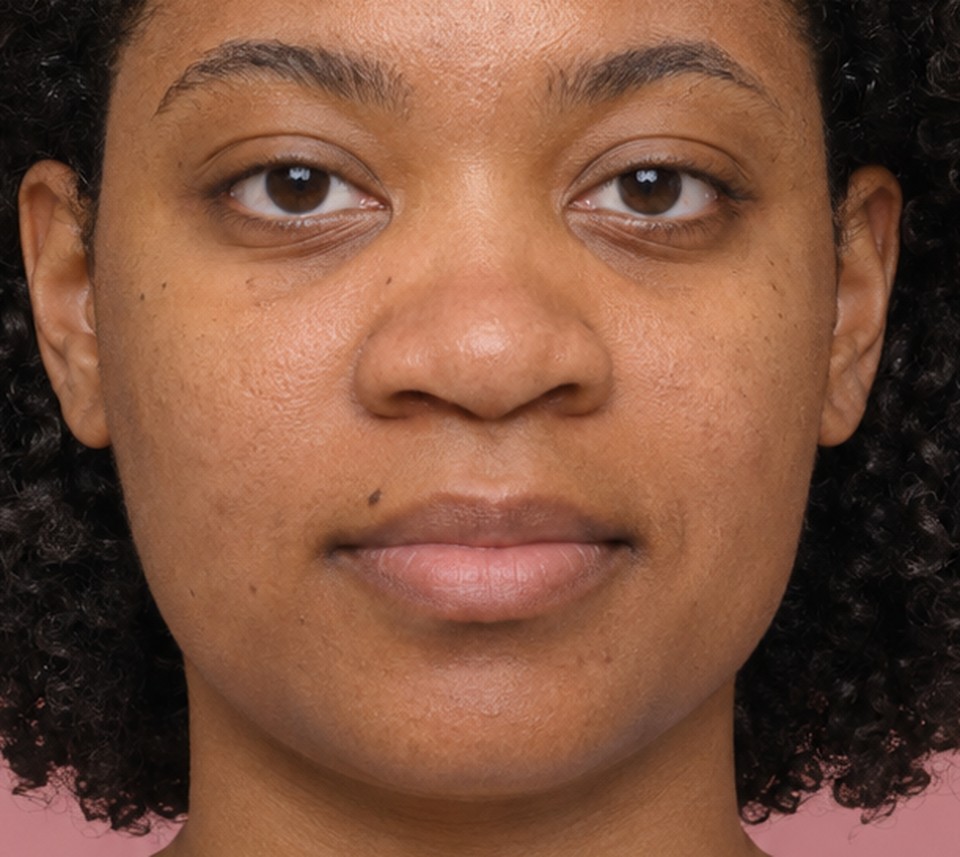
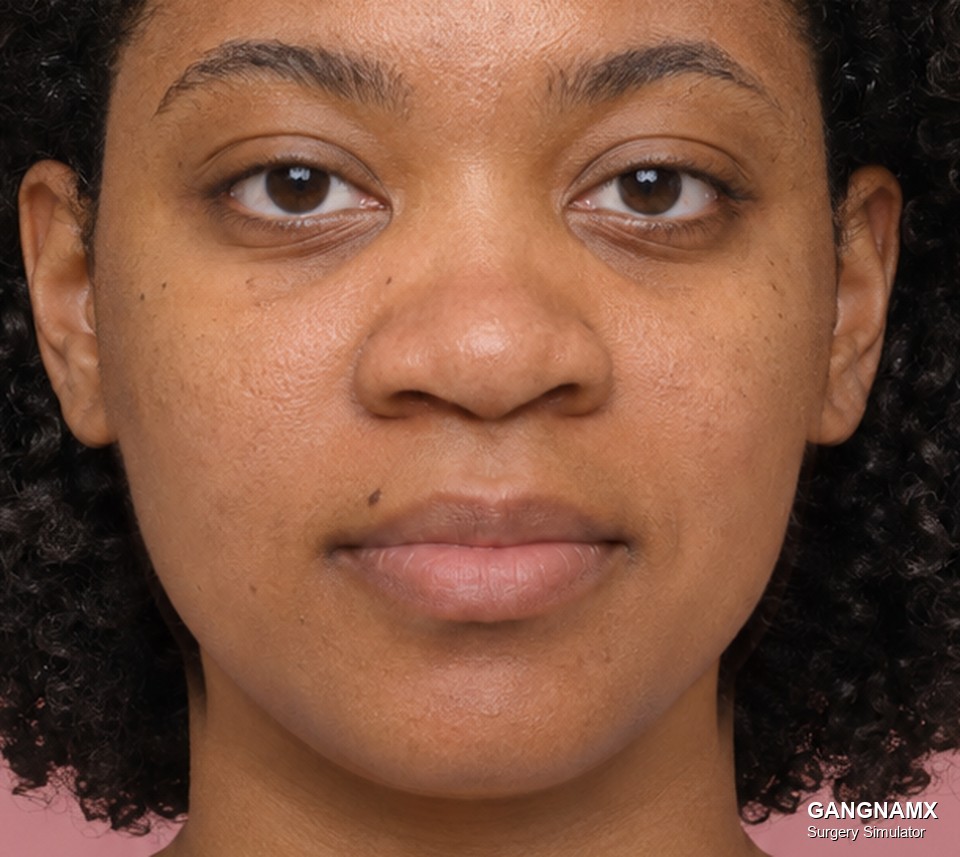
This is the part that most often goes too far. A jaw that narrows too much can look pinched next to the cheeks. The edit here narrows the lower face in a way you can see at a glance, yet the face keeps its character.
What happens when both change together?
The look appears when the two sit in balance. In the third simulation, both changes combine. The lower face is visibly narrower, and the jaw edge falls away more gently toward the chin.
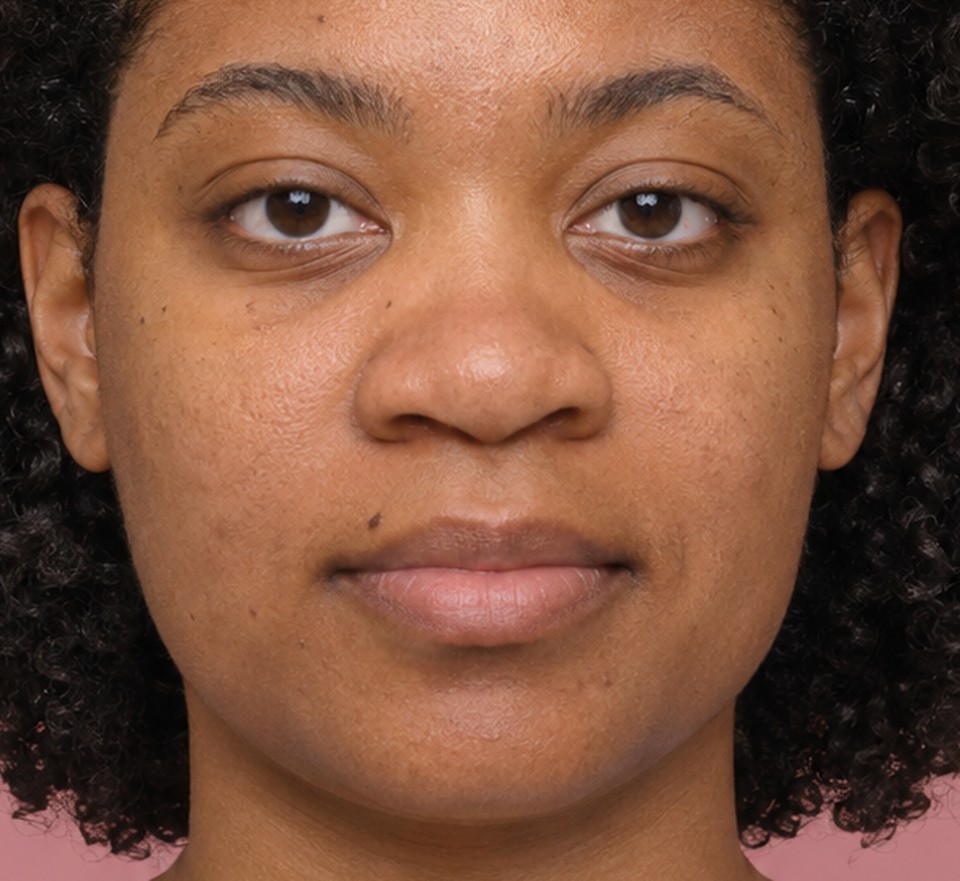
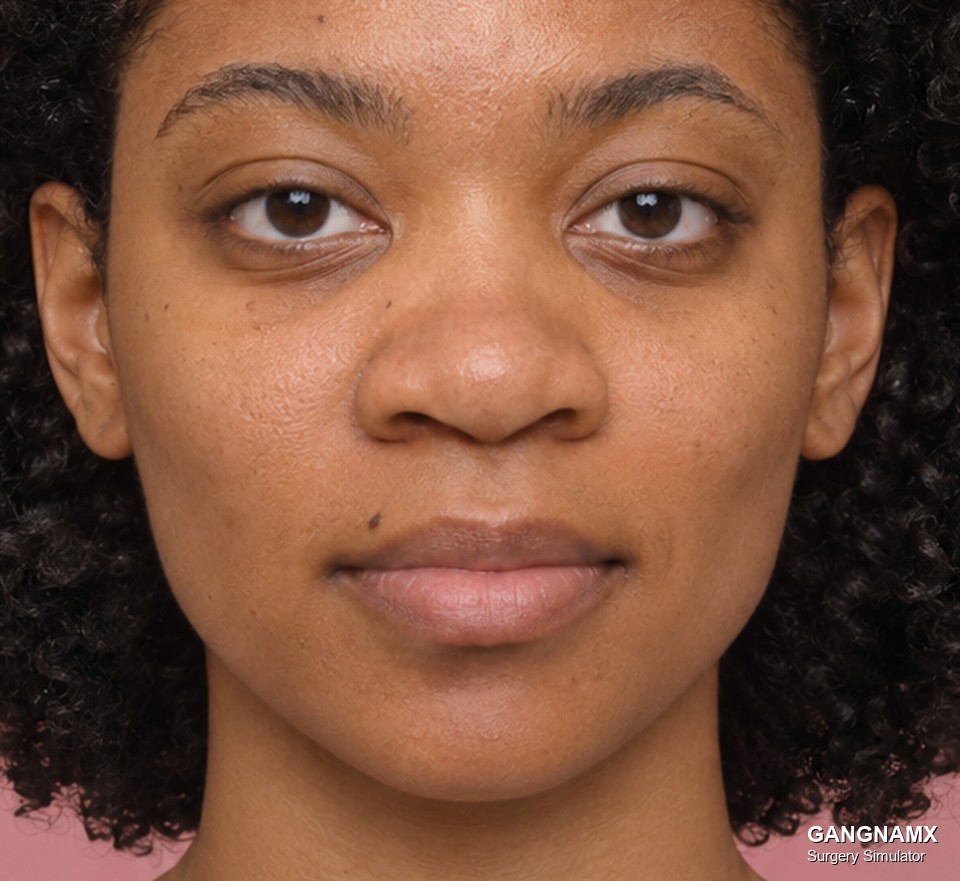
Compare with the originals above. The face is still hers: same eyes, same nose, same warmth. What shifted is how the lower half frames those features.
Whether a result like this is possible, and by what means, is a question for a qualified surgeon after an examination. Cheek volume, jaw width and chin shape can be influenced in different ways, and each has limits and risks.
Why does a reference look different on you?
A face you admire has its own bone structure, skin and facial fat. Move the same cheek and jaw balance to another face, and the result changes. Wider faces, narrower faces and rounder ones each need a different amount.
Expression and angle matter too. A photo taken slightly from above makes the cheeks look higher and the jaw narrower. The same face from below does the reverse. Many reference images rely on that angle more than on structure.
Styling adds more. Hair frames the lower face, makeup shapes the cheek highlight, and light does the rest. When you study a reference, separate what is structure from what is styling. Only the first can be changed by a procedure, and even then with limits.
Is more definition always better?
No. Too much cheek can look hollow or hard, and too narrow a jaw can look unnatural from the side. The nicest faces tend to be balanced, not extreme.
Think of the goal as relationship. The cheekbone, jaw and chin should look like they belong to one face. If one part leads, the others should follow rather than compete.
Keep your heritage in view as well. Facial features that run in your family are part of what makes you recognizable. A refinement that keeps that resemblance usually looks more natural than a swap to someone else’s proportions.
How can you check your own balance first?
You can do a rough self check before any plan. Take a front photo in soft window light, with your hair back and your face relaxed. Keep the camera at eye level and look straight into it.
Now compare three widths: across the cheekbones, across the jaw angles and across the forehead. If the cheeks are the widest point and the jaw tapers below them, you already have the base of a gentle V. If the jaw is as wide as the cheeks, the face reads squarer.
Neither is better. Each shape suits a different kind of balance, and the useful question is which small adjustment would suit yours. A side photo adds the chin, which closes the shape and often decides how sharp the jaw looks.
How do you make the idea fit your own face?
A reference is a direction. Your bone structure, skin and age decide how it lands. The respectful way to use a look is to take the part you love and keep the rest of you.
Before a consultation, try these three steps.
- Find two or three photos that show the cheek and jaw balance you mean, from the front and the side.
- Write down what you like in plain words, for example “a clearer cheek line” or “a softer jaw edge”.
- Ask what, if anything, is realistic for your face, and what each option would not change.
Matching a look exactly is rarely the goal, and a copy of someone else’s face would not look like yours anyway. The better goal is balance that suits your proportions.
Seeing a small change on your own photo first helps you decide whether the idea even appeals. Try the cheek and the jaw separately, then together.
Simulation images by GangnamX.