Journal
Why is one eyelid suddenly droopier than the other?
Most lid differences are ordinary drift. Learn what causes a droopier eyelid, how to check fairly, and which signs mean see a doctor soon.
 Rebecca Wetherby
If one eyelid looks lower than the other this week, the cause is often ordinary: sleep, swelling, allergies, contact lenses or a tilted head in the photo. A sudden change with other symptoms is different and needs a doctor.
This post separates the two. First we look at how much difference is normal, then at the usual harmless causes, then at the signs that should not wait.
How much difference between two eyelids is normal?
Almost everyone has a little. Faces are not mirror images, so one upper lid usually sits a fraction of a millimetre higher, and the crease or brow behind it can differ too.
You tend to notice it more when it changes. A pattern that has always been there fades into your mental picture of your own face. A new one catches the eye.
To show what a small difference looks like, I used our model as a baseline. Her lids start close to even. In the simulation, her right upper lid is lowered by a visible amount, about what a puffy morning or a tired day can do.
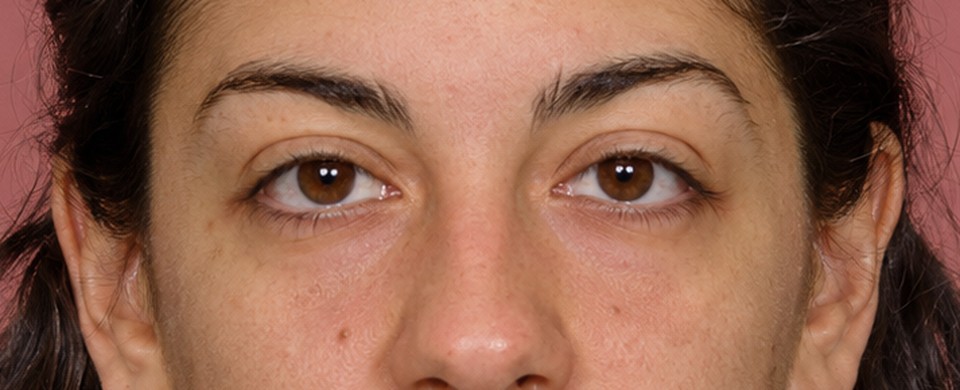
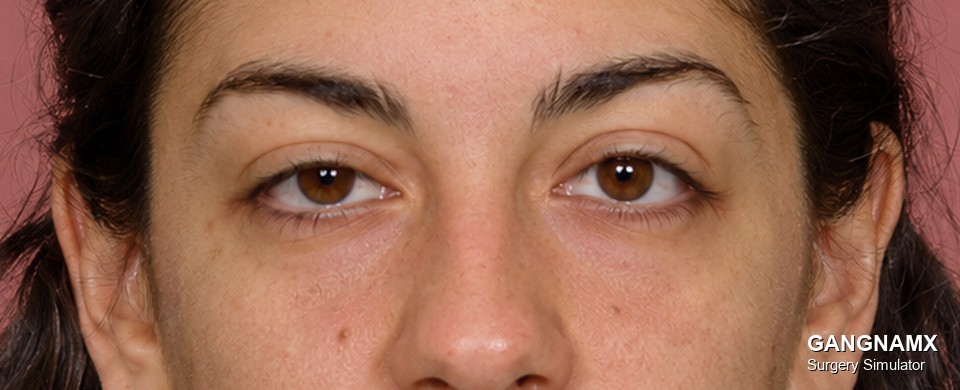
Notice how clearly you read it. The eye is very good at spotting a difference between two sides, and here one lid plainly sits lower and the eye looks smaller and more tired.
What are the usual harmless causes?
Many everyday factors move the lid edge by a hair. They also tend to come and go, which is a useful clue. Here is how they compare.
| Cause | What you may notice | Usual pattern |
|---|---|---|
| Sleep position | One side puffier on waking | Settles within hours |
| Tired eyes or screen strain | Both lids heavy, one more than the other | Better after rest |
| Allergy or rubbing | Swollen, itchy lid | Eases as the trigger fades |
| Contact lens wear | A lid that feels weighed down | Often linked to lens fit or irritation |
| Photo angle | One eye looks smaller in a selfie | Changes with head tilt and lens distance |
Contact lenses deserve a note. Long term wear can irritate the lid, and a lens that sits badly may make the lid feel heavy. If you wear lenses and one lid looks lower, a quick visit to your eye care professional is a sensible first stop.
Age also plays a part. Skin loosens and the muscle that lifts the lid can stretch slowly over years, which is a gradual change, not a sudden one. That is the territory of ptosis, the medical word for a lid that sits lower than it should.
Which signs mean you should see a doctor?
Here I stop being a style guide and become plain. A droopy lid that appears quickly, especially with other symptoms, can have a medical cause. Do not wait for a consultation about looks.
Seek prompt medical care if the droop comes with any of these:
- double vision or blurred vision
- a new headache or pain in or around the eye
- one pupil that looks larger or smaller than the other
- weakness, numbness or drooping on one side of the face
- trouble speaking, swallowing or moving a limb
- a lid that dropped after an injury
Treat sudden drooping together with facial weakness or speech trouble as an emergency and call your local emergency number. I cannot diagnose anything from a photo, and neither can an app.
A droop that has crept in over months or years is less urgent, but it is still worth an eye or medical review before any cosmetic plan. A clinician can tell whether the cause is skin, brow position or the lifting muscle itself.
How can you check fairly at home?
Photos mislead. Head tilt, a raised chin and a wide angle lens all change how the lids compare. So set up a plain test before you decide anything has changed.
- Stand at a window with soft light in front of you, not above.
- Hold the phone at eye level, about an arm’s length away.
- Keep your head level and your chin neutral, and look at the lens.
- Relax your forehead. Frowning or lifting the brows hides the real difference.
- Take three photos on three different days and compare them side by side.
If the gap is the same in all three, it is probably your stable asymmetry. If it grows, or only one day looks off with no explanation, note the dates and mention them to a doctor.
The same model view helps when the lids are even but the brows are not. A lowered brow can look like a heavy lid. That question belongs in a separate comparison, and we cover it in the post on brow lift and eyelid surgery.
Could the brow be the real culprit?
Sometimes the lid is fine and the brow has moved. A brow that sits lower on one side presses on the lid skin, and the eye beneath looks smaller. People then blame the lid.
Test it with a mirror. Relax your face, then look at the distance from lash line to brow on each side. If one side is clearly shorter, the brow may be the driver, and the fix is a different question from the lid.
Habits matter too. Many people lift one brow more than the other without noticing, to see better or from long screen time. That alone can make one eye look wider. Check your photos with a relaxed forehead before assuming the lid changed.
What makes the difference look worse in photos?
Cameras exaggerate. A phone held below eye level tilts the face up and flattens the upper lids. A phone held higher makes the nearer eye look larger. Wide angle lenses stretch whatever is closest to them.
Lighting adds more. Overhead light drops a shadow under the brow, which can make one lid look heavier. Light from one side makes the near eye brighter and the far eye smaller.
Makeup, tired skin and even a squint into the sun can add a few tenths of a millimetre. Our simulation lowered one lid by a small but plainly visible amount. That tells you how sensitive the eye is to small changes, and why a single bad photo should not worry you.
What can you ask a clinician about it?
If the difference is stable and you are curious about cosmetic options, a clinician can tell you whether the cause is skin, brow position or the muscle itself. Those three have different answers, and the right one depends on an examination.
Useful questions are simple. Has this changed over time? Is there anything about the lid position that should be checked before cosmetic work? Which structure is responsible: skin, brow or the lifting muscle?
Bring your dated photos. They save time and give the clinician something objective to compare with what they see in the room.
What can you do with this next?
Keep the sorting simple. Short, mild, explainable changes are usually ordinary. Fast changes, pain, vision trouble or facial weakness are medical until proven otherwise. A slow, stable difference is a question for a consultation, not a panic.
If the difference has always been there and you wonder how much you would see it changed, a simulation can show you. It is a picture of appearance only. It cannot say why a lid sits where it does, and it does not replace an examination.
When you do book a consultation, bring your dated photos and ask three things. Is this the lid, the brow or both? Is anything here a health matter first? Which changes would keep my eyes looking like mine?
Seeing a small, realistic change on your own face first makes that conversation more precise.
Simulation images by GangnamX.